Face Recognition vs GPS Photo Attendance: Which Fits?
A neutral comparison of face recognition and GPS photo attendance: what each proves, which cheating it stops, field work and data protection rules.
The two attendance methods people ask about most today are face recognition (a terminal at the gate or an app on the phone) and GPS photo attendance (staff take a photo at the workplace). They sound alike because both involve a camera, but they answer different questions.
SnapID Mark belongs to the second group and does not do face recognition. This guide tries to present both fairly. The wider picture, including fingerprint, Wi-Fi and paper, is in attendance methods compared.
What each one proves
| Question | Face recognition | GPS photo |
|---|---|---|
| Is it the right person? | Strong. The system matches the face to an enrolled template | Weak without a selfie. A reviewer has to look at the photo |
| Is it the right place? | Fixed terminal: strong, since it sits at the gate. App: depends on GPS checks | Strong with a geofence and fake-location blocking |
| Is it the right time? | Terminal or server clock | Depends on the app. Best is network time, not the phone clock |
| What was being done? | Not shown | The photo shows the site, the work and the weather |
| Can outsiders check it? | Usually not, data stays internal | Some apps add a verification code or QR anyone can check |
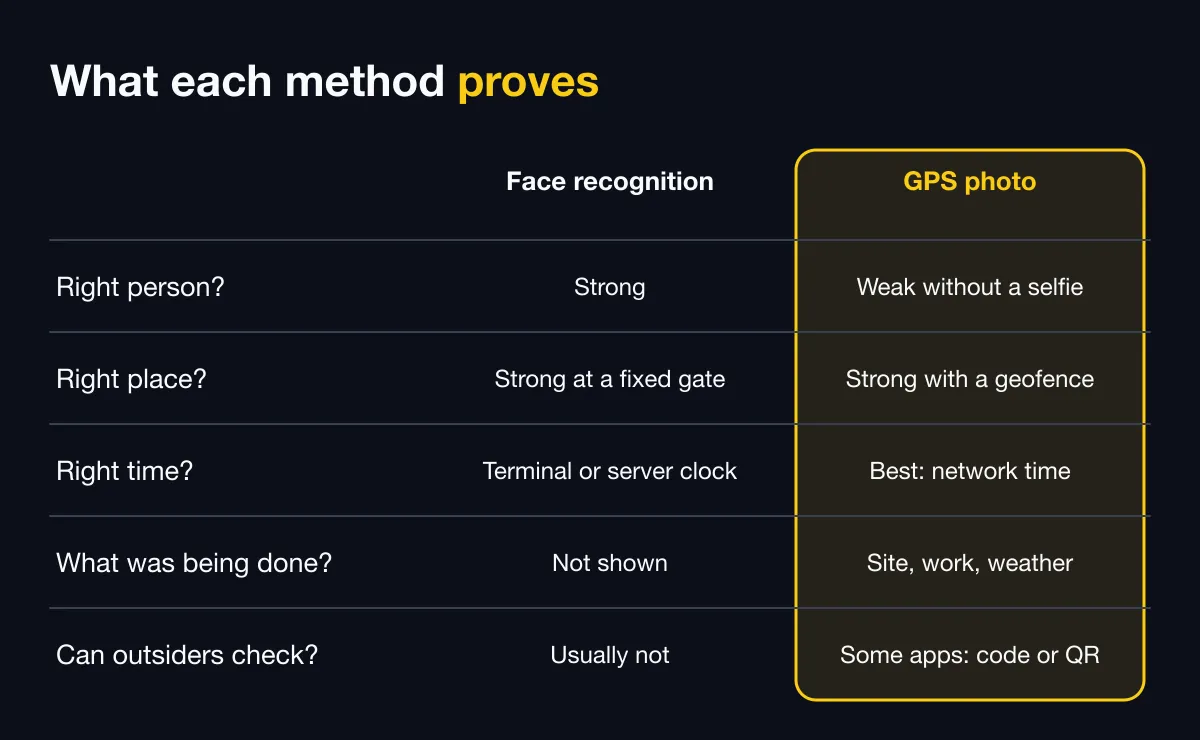
In short: face recognition is strong on identity, GPS photos are strong on place and work context.
Which cheating each one stops
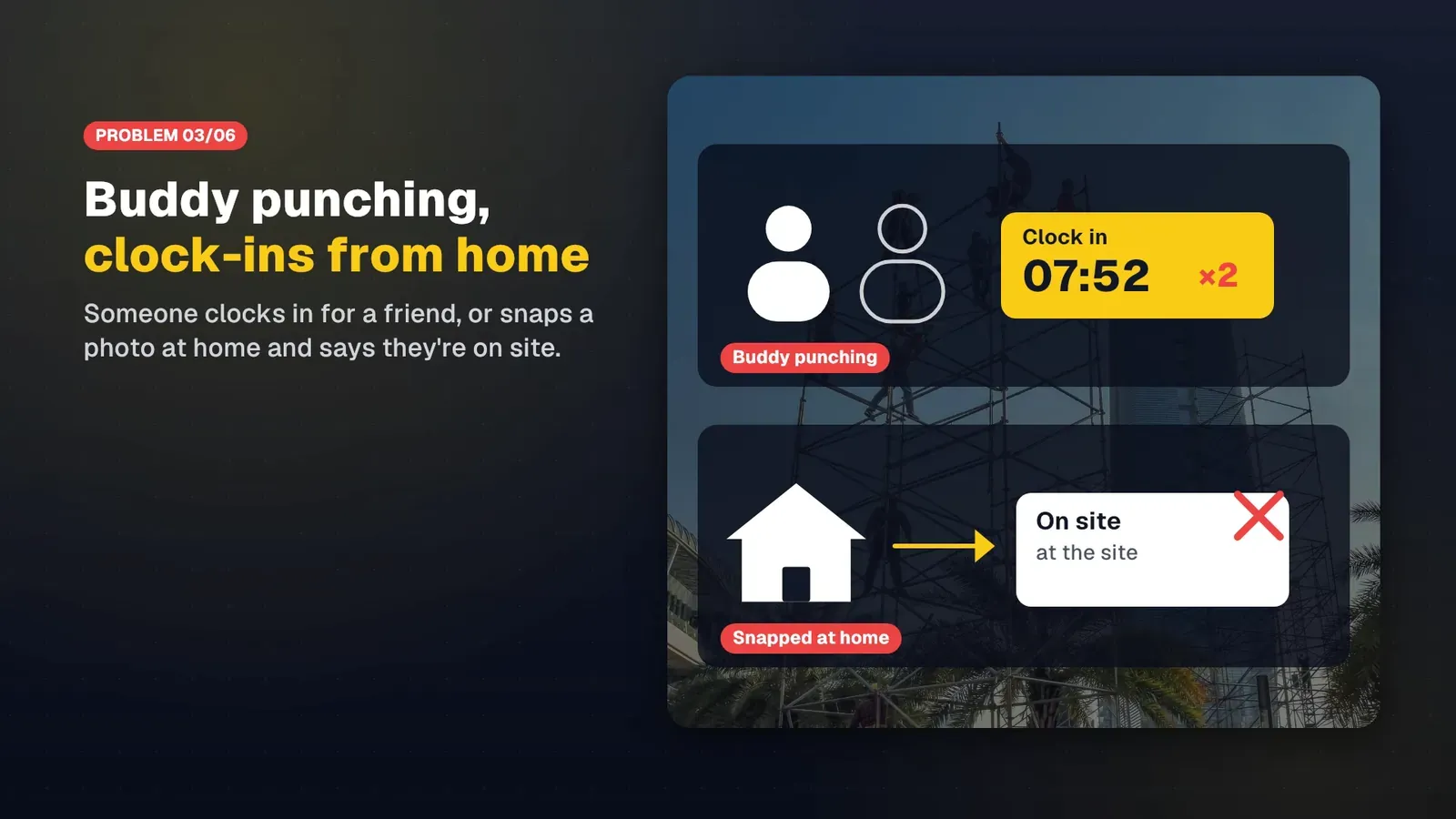
Buddy punching. Face recognition does better, especially with liveness checks against printed photos. GPS photos only stop it if selfies are required and someone reviews them.
Fake location. A fixed face terminal is not affected. Face apps and GPS photo apps on phones both need to detect mock-location apps.
Changing the phone clock. This affects any phone app that trusts the device clock. The fix is time synced with a server. See trusted time vs phone time.
Old photos or photos of photos. A good GPS photo app only accepts shots taken live from the camera, not picks from the gallery.
Each pattern is covered in stop attendance fraud.
Which work pattern each one suits
- Factories, offices, stores with a fixed entrance: a face terminal is quick and does not depend on personal phones.
- Changing job sites, field sales, installers on the move: there is nowhere to mount a terminal. A phone app fits better, whether face or GPS photo.
- When you need proof of work for clients: GPS photos add value because the clock-in photo can also record the site.
- Workers in helmets, masks or harsh sunlight: test in real conditions. Lighting and protective gear can slow down or break recognition.
Personal data: both are sensitive
This is often misunderstood. Many assume only faces are sensitive data and location is not.
In Vietnam, the Law on Personal Data Protection No. 91/2025/QH15 took effect on 1 January 2026, with Decree 356/2025/ND-CP guiding it. Article 31 deals specifically with personal location data and biometric data:
- Biometric data is data about stable, distinctive physical or biological traits used to identify a person. Processors must secure storage and transmission equipment, limit access and monitor for breaches.
- Personal location data is data determined by positioning technology. The law prohibits tracking a person through radio-frequency identification or similar technology without their consent, unless the law provides otherwise. Mobile app providers must tell users how location data is used.
Whichever method you choose, tell staff the purpose, get consent, limit who can see the data and set rules for deleting it. This article is general information, not legal advice. Read the original texts and ask your legal team. For policy wording, see photo attendance policy.
One principle lowers risk for both: collect as little as possible. With GPS photos, record location only at clock-in rather than all day. With face recognition, keep only the templates needed for matching and delete them when someone leaves.
Cost and rollout
| Item | Fixed face terminal | Phone app |
|---|---|---|
| Hardware | Buy, install, power, network | Staff phones |
| Enrolment | Register each face | Install the app, create accounts |
| Multiple sites | One terminal per site | Add sites on the admin website |
| No signal | Depends on the terminal’s offline storage | Depends on whether the app supports offline clock-in |
Combining both
Many companies run both: face terminals at the office or factory, and GPS photo attendance for field teams. Timesheets are exported to Excel and merged at month end.
Where SnapID Mark fits
- Photo attendance with Clock in and Clock out, front or rear camera, selfie not required.
- Geofence of 20 m to 50 km, and workspaces block capture while a mock-location app is on.
- Trusted network time, so offline clock-ins keep the correct time.
- Location is read only while the app is open, never tracked all day.
- No face recognition, no Wi-Fi clock-in, no payroll, no API or SSO yet. A SnapID code is not a legally certified timestamp.
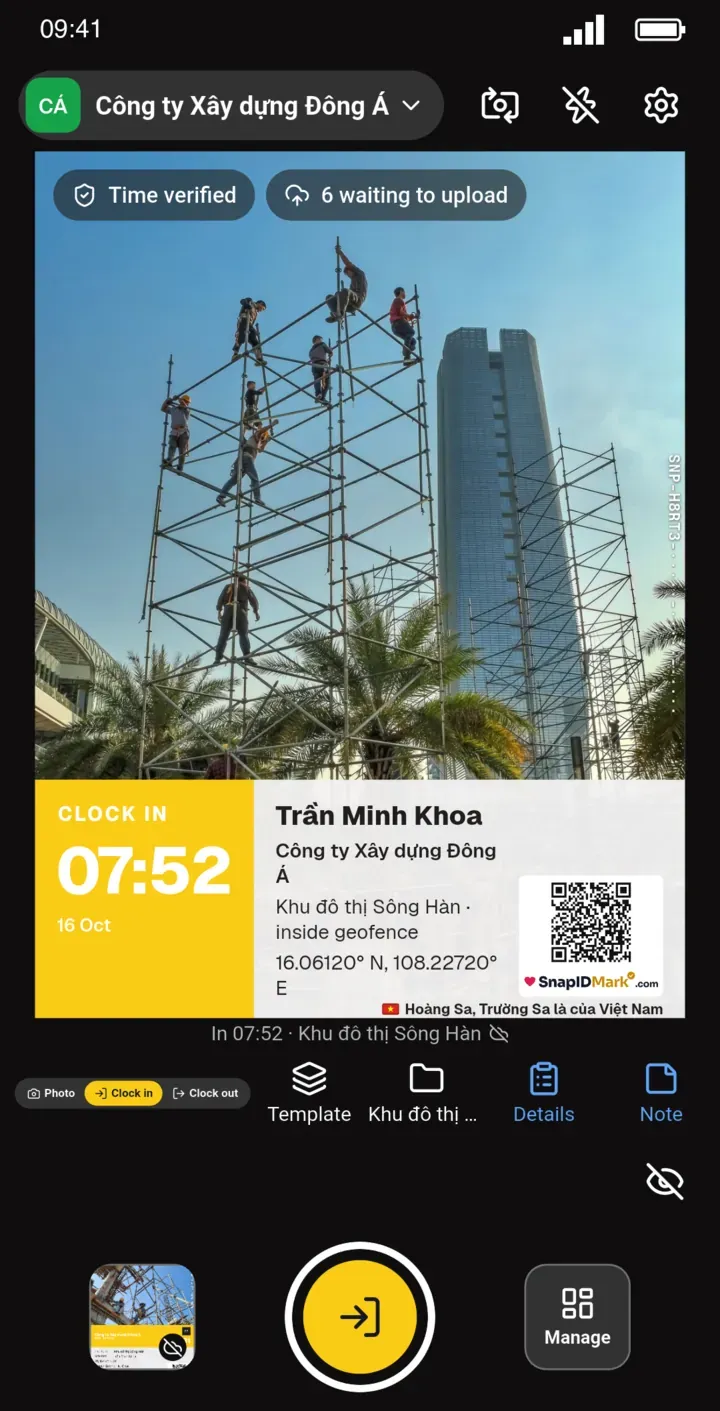
See how it works in Photo attendance.
Fingerprint machines versus phone apps are compared in fingerprint time clock vs attendance app.
FAQ
Does photo attendance stop buddy punching?
Only partly. If you need strict protection, require selfies in your policy and review them, or use a face terminal at fixed locations.
Is a clock-in selfie biometric data?
A portrait photo is different from a face template used for automatic matching. Ask a lawyer where the legal line sits. Either way, a portrait is personal data and needs protection.
Where should we start?
List where your people work. If most pass a fixed entrance, consider a face terminal. If most move around, pilot a phone app with a small group for two weeks.
Get started
Download SnapID Mark and create a workspace on the admin website to try photo attendance with a field team. Read more in photo attendance apps compared.